

Mont-Saint-Michel… A medieval abbey-topped island and former pilgrimage site off the Normandy coast, linked to the mainland by a causeway and ringed by some of Europe’s most dramatic tides. Walk in and watch the silhouette come into focus: slate roofs, spiralling lanes, and a golden archangel flashing in the light. It’s cinematic. It’s ancient. And it’s absolutely worth the trip.
How to Get to Mont Saint Michel
From Paris, the smoothest option is rail to either Rennes or Pontorson-Mont-Saint-Michel. The Rennes route pairs a fast TGV with a dedicated coach for the final stretch, while the Pontorson option connects you to the free Passeur shuttle that runs across the causeway. Both are straightforward, scenic, and save the hassle of parking on busy days. Driving from Paris takes roughly four to four and a half hours. You’ll park in the official mainland car parks, then either walk the causeway for that slow, spectacular reveal or hop on the shuttle.
From Caen, expect around one and a half to two hours by car, following signs to the official car parks before transferring by foot or shuttle. Public transport is possible via regional trains toward Pontorson with a short shuttle connection at the end; check timetables in advance to keep changes tight.
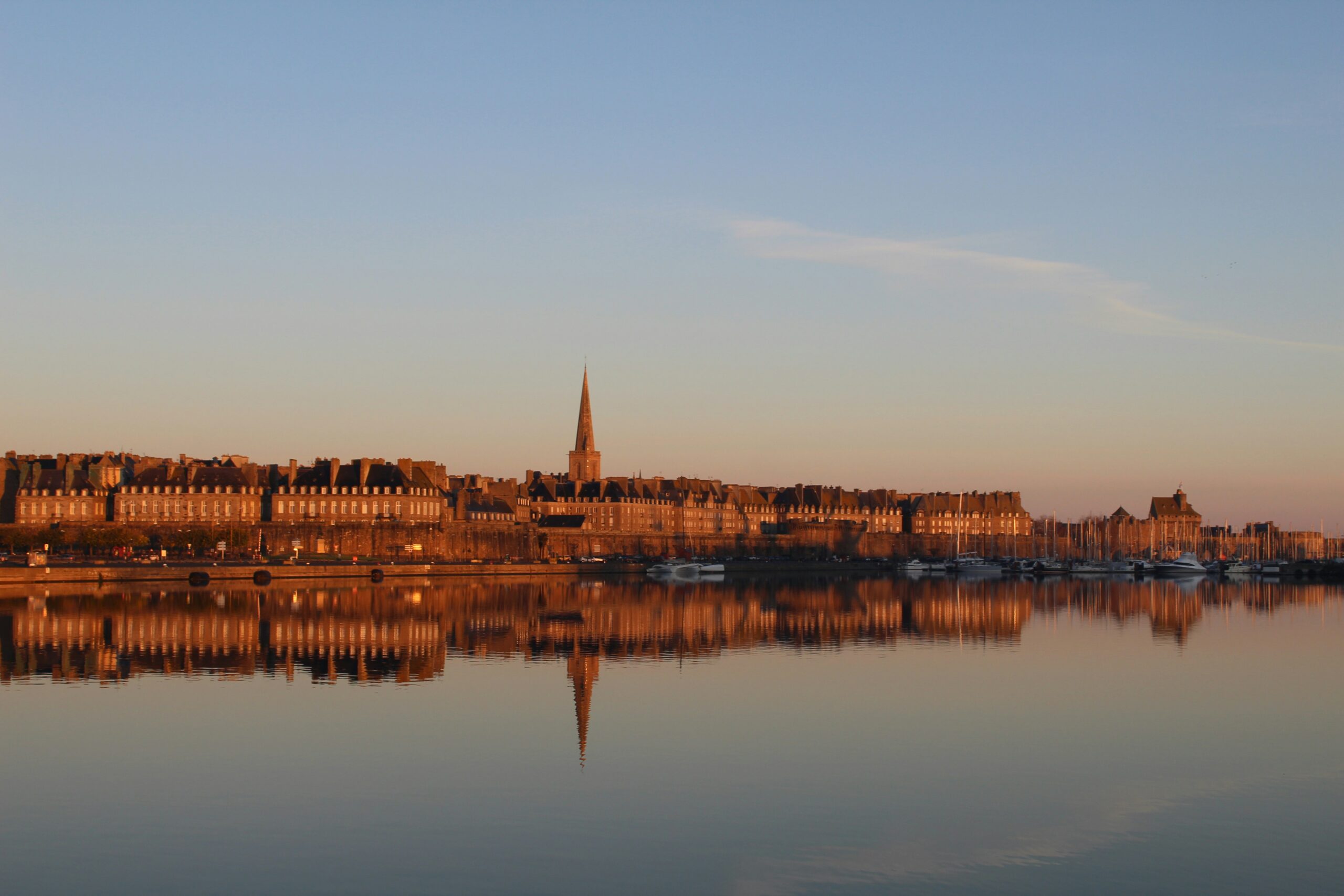
From Saint-Malo, it’s a beautiful one-hour drive that slips from coast to countryside. Seasonal buses are also another option, sometimes run directly between Saint-Malo and Mont-Saint-Michel, but schedules are thinner outside peak months, so verify times if you’re travelling off-season.
Best Time to Visit Mont Saint Michel
Spring (April–May) and autumn (September–November) are ideal: cooler weather, fewer crowds, and tides that are often more dramatic. Summer brings long daylight hours but also peak visitors — expect busier streets and higher prices. Winter has a quiet, atmospheric feel, though some shops and shuttles run on reduced schedules.
For the most cinematic experience, plan around the tide tables. High tide transforms Mont-Saint-Michel back into a true island, while low tide reveals vast sand flats and wide horizons. Both are beautiful, but high tide is especially magical.

What Makes Mont Saint Michel So Special
It’s the alchemy of landscape and architecture. The abbey rises tier by tier from the granite, a vertical village reaching from sand flats to sky. The story begins in 708, when Bishop Aubert of Avranches, prompted by visions of the Archangel Michael, founded a sanctuary on what was then known as Mont Tombe. A Benedictine community settled here in 966, and 11th-century builders achieved a marvel of engineering by creating four crypts around the tip of the rock and setting a great Romanesque church on top. In the 13th century, royal patronage accelerated the Gothic expansion, culminating in “La Merveille,” the soaring three-storey complex crowned by the cloister and refectory. Through the Hundred Years’ War the mount held fast, its ramparts turning a sacred site into a symbol of resilience.
Step inside today and you feel that layering of time: cloisters suspended in light and shadow, refectories echoing with quiet, and views that fall away to a bay shaped by some of Europe’s most dramatic tides.
💡 Fun Fact
Mont Saint Michel has a British cousin across the Channel. St Michael’s Mount sits off the coast of Marazion in Cornwall, a tidal island with its own causeway and a medieval castle that once housed a priory linked to Mont Saint Michel. Both places share the same dedication to the Archangel Michael, a hill-top guardian often associated with dramatic, sea-edge sanctuaries. The name connection isn’t a coincidence: medieval devotion to St Michael spread across Europe, and Mont-Saint-Michel’s influence helped seed sister foundations like the Cornish mount.
What to Do at Mont Saint Michel
Start with the approach. If you can, walk the causeway and let the wind set your pace, the mount shifting with every step and the scent of salt and sea grass sharpening your senses. Climb through the village and up to the abbey; the refectory, great halls, and cloister layer calm upon grandeur, and mornings are quieter, especially outside school holidays.
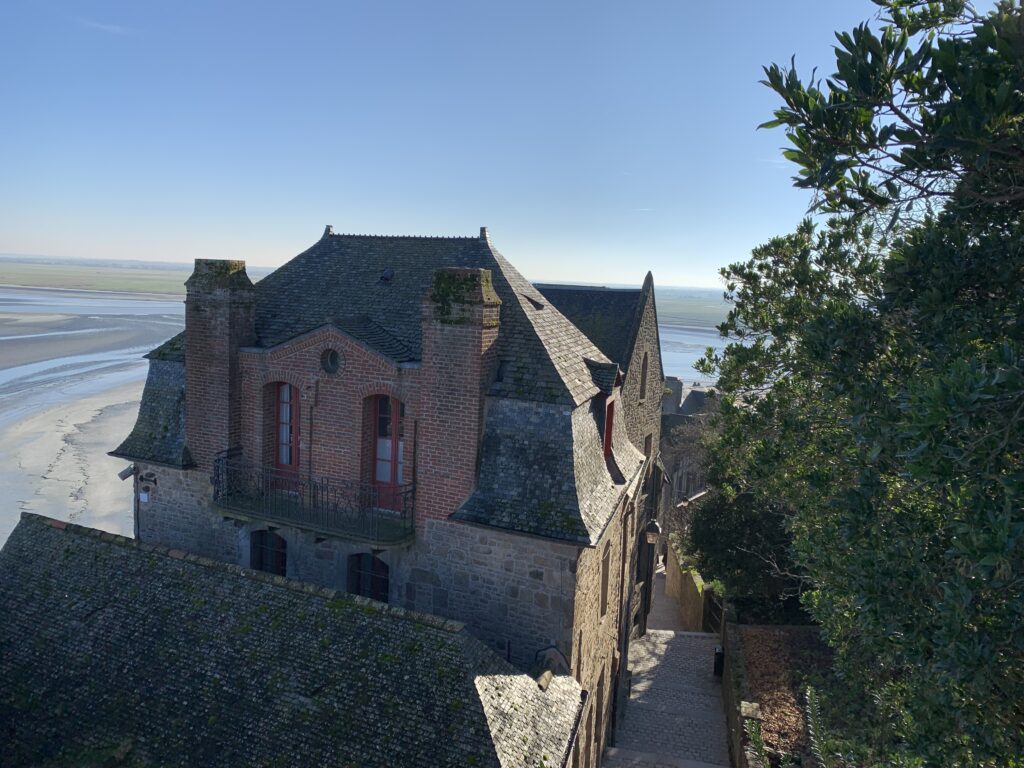
Follow the ramparts for wide-angle views of the bay, which on clear days feels endless, then dip back into side alleys for glimpses of worn stairways and small shrines before returning to the light.
For travellers planning a day trip from Paris to Mont Saint Michel, timing matters: catching the high tide will give you that unforgettable “island reveal.”
Pro Tips for a Better Visit
Food on the island is, frankly, not the highlight. Prices run high and quality rarely matches the setting, with tourist-trap menus clustered along the main lanes. Instead, bring your own simple feast and make it memorable. There’s a lovely park on the right side of the abbey that’s perfect for a picnic; think good cheese, fresh bread, fruit, and a bottle of wine, then claim a spot with a view.
➡️ On your way through Normandy, stop at Le Pressoir de Henwiel, a great local cider producer where you can taste and buy authentic cider — one of the region’s true highlights.
If you’re driving, know that the car park is vast but timing is everything. Arrive early to avoid the midday wave of tour buses, or aim for late afternoon when the light softens and the streets exhale. Above all, check the tide schedule before you go and plan your day around it; it will change the view and amplify the magic.
Mont Saint Michel rewards those who take their time. Arrive early, walk the causeway, climb to the cloister, then exhale on the ramparts with your picnic as the sky turns gold. Let the tide do its quiet spectacle. Leave with sandy shoes, wind-tangled hair, and that rare feeling you only get in places shaped by patience and light.